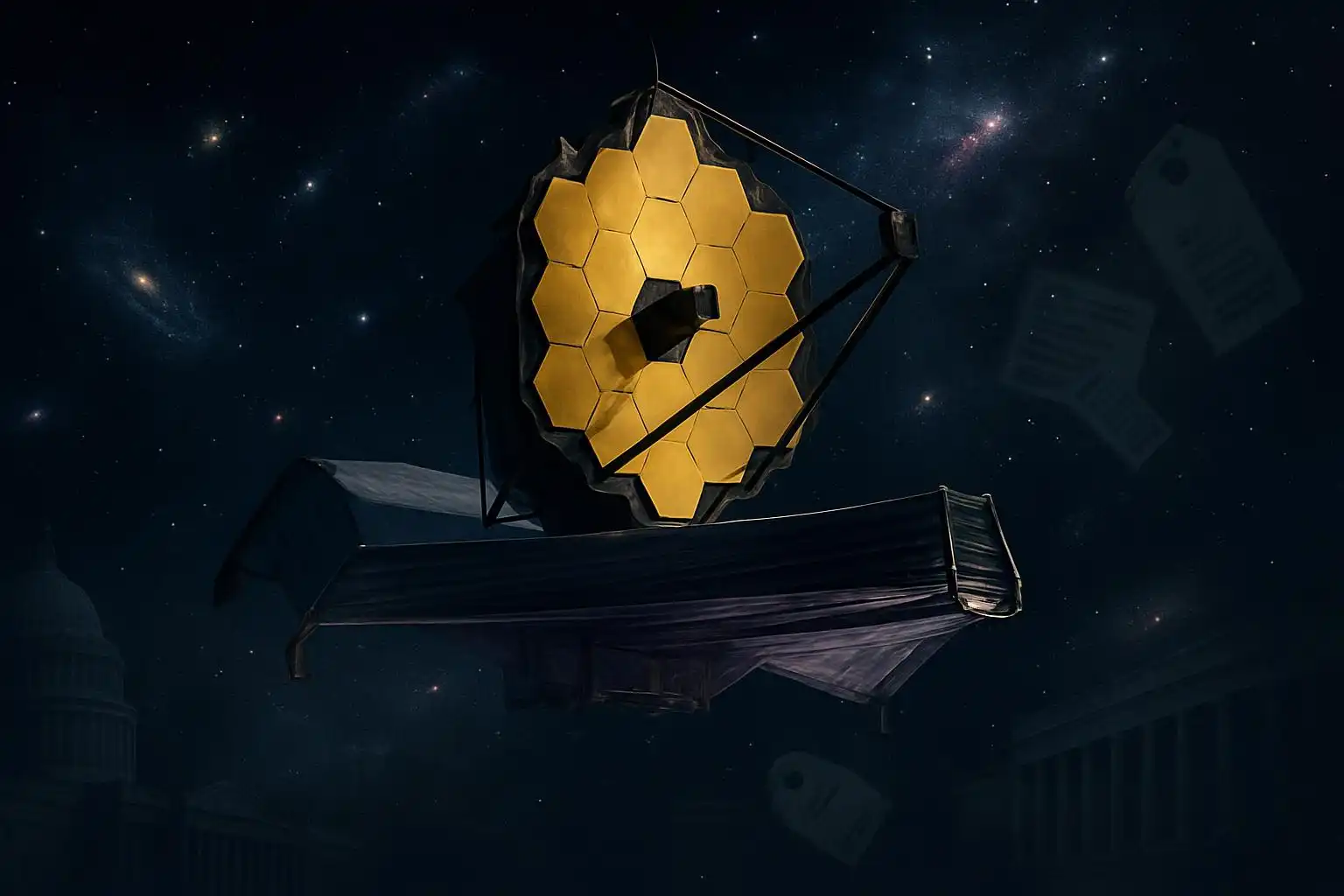

When Senator Barbara Mikulski stood before the Senate Appropriations Committee in July 2011, she had a choice to make. The James Webb Space Telescope—already seven years behind schedule and $6.5 billion over its original $1 billion estimate—faced cancellation by House Republicans. Mikulski, who chaired the subcommittee controlling NASA’s purse strings, had to decide whether to defend the project or let it die. “It’s too important to abandon,” she declared, according to the hearing transcript. Congress agreed, barely. The telescope survived, but with a hard cap: $8 billion for development, plus operations. No more.
It didn’t hold. By launch in December 2021, JWST’s total cost reached approximately $10 billion, making it the most expensive science mission in NASA history and a case study in how Big Science projects slip from ambitious to nearly unaffordable.
The Original Sin: Faster, Cheaper, and Wrong
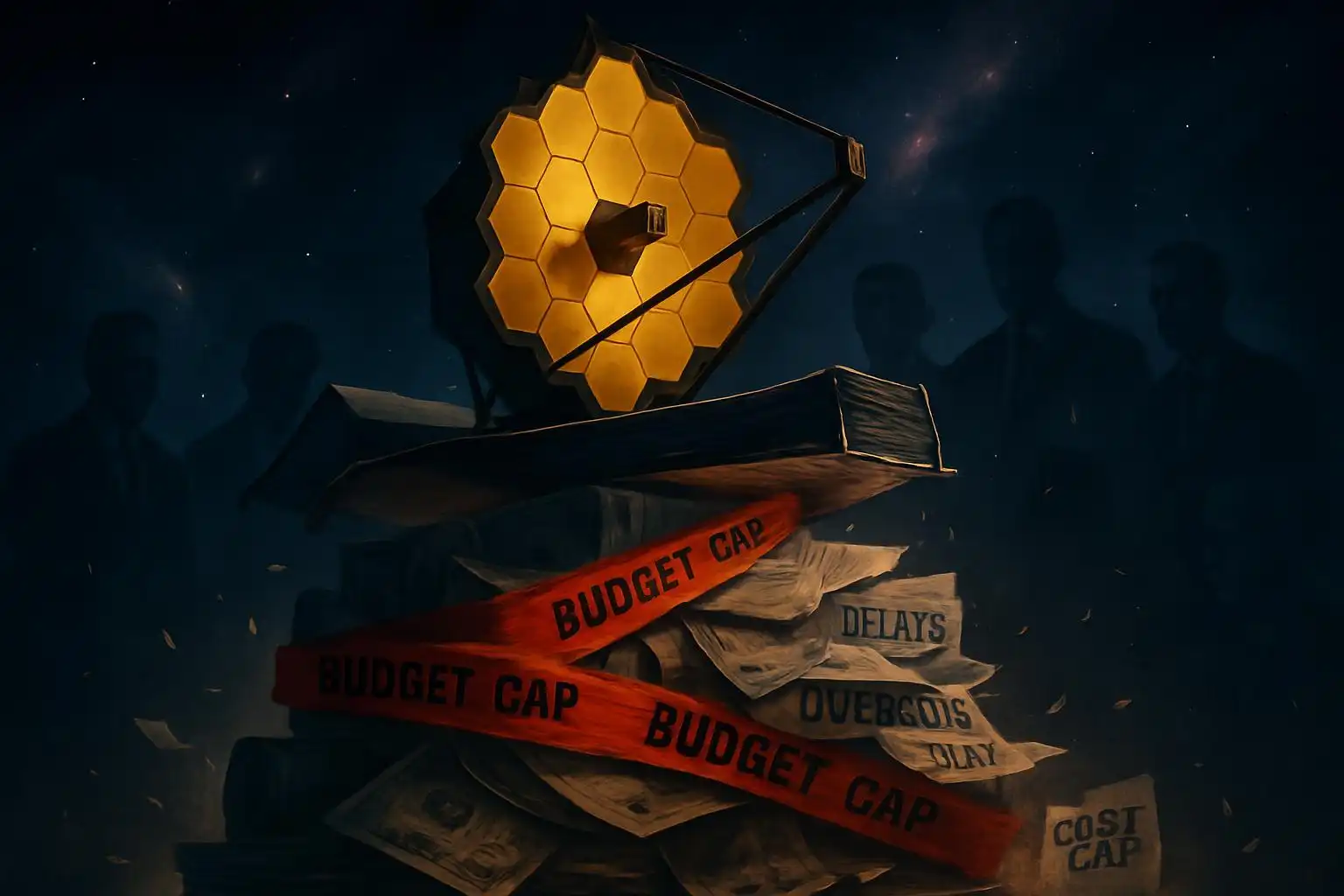
The trouble began in the 1990s, when NASA pitched JWST—then called the Next Generation Space Telescope—as a streamlined successor to Hubble. The 1996 proposal estimated a $500 million mission launching in 2007. By 2002, when the project was renamed for NASA’s second administrator, the estimate had doubled to $1 billion, with launch pushed to 2010. Neither number was grounded in engineering reality.
“We were under enormous pressure to lowball the cost,” a former NASA official told Science magazine in 2010, speaking on condition of anonymity. “Everyone knew it would cost more, but if you said $5 billion in 1996, Congress would never have started it.”
The strategy worked—until the bills came due. In 2010, an independent review led by JPL engineer John Casani found the project was already over budget and behind schedule, with insufficient management oversight. NASA restructured, but the problems persisted. By 2010, the Government Accountability Office reported the mission would cost at least $6.5 billion and launch no earlier than 2015.
The Fight for Survival
The crisis peaked in summer 2011, when the House Appropriations Committee, led by Kentucky Republican Hal Rogers, proposed canceling JWST outright, with the Commerce-Justice-Science subcommittee chaired by Frank Wolf. “We’re talking about a telescope that’s billions over budget in an era when we’re cutting education and health care,” said supporters of the measure at a July hearing. The House bill would have terminated the project and redirected funds to other NASA programs.
The astronomical community mobilized. The American Astronomical Society launched a public campaign. Nobel laureate John Mather, JWST’s senior project scientist, testified before Congress. Mikulski—representing Maryland, home to the Space Telescope Science Institute and thousands of JWST-related jobs—fought back hard. “Canceling JWST would be penny-wise and pound-foolish,” she said. “We’ve already spent $3 billion. Walking away now means we get nothing.”
The Senate restored funding, and in conference committee, JWST survived with the $8 billion cap through launch. But the cap came with strings: quarterly reports to Congress, independent reviews every two years, and a requirement that any further overruns come from NASA’s other science programs. The message was clear: no more money.
Why It Kept Growing
Even with Congressional oversight, costs continued to climb. The reasons were technical and managerial. JWST’s sunshield—a tennis-court-sized, five-layer membrane that had to unfold perfectly in space—required years of testing after tears appeared in 2018. The spacecraft’s integration with its Ariane 5 rocket, a European contribution, was delayed by COVID-19. And NASA’s cost-plus contracting with prime contractor Northrop Grumman incentivized thoroughness over speed.
“Every time we found a problem, we had two choices: accept risk or spend more time and money fixing it,” said former JWST program director Greg Robinson, who took over in 2018 after NASA replaced the previous management. “With a one-shot mission—no servicing, no second chances—we fixed everything.”
The overruns also reflected NASA’s institutional culture. A 2020 report by the NASA Office of Inspector General found that the agency systematically underestimated costs for flagship missions, in part because realistic budgets would make projects politically unviable. JWST wasn’t an outlier; it was the rule.
The Decadal Survey Dilemma
The JWST overruns had consequences beyond the project itself. Because NASA’s astrophysics budget is essentially fixed, every dollar spent on JWST came from somewhere else. The 2010 Decadal Survey, astronomy’s consensus priority-setting exercise, had ranked the Wide Field Infrared Survey Telescope (now Nancy Grace Roman Space Telescope) as the top large mission for the 2010s. Though it received some formulation and development funding during the JWST years, its full development was significantly constrained until JWST launched.
“JWST ate the decade,” said one mission scientist involved in the Decadal process, speaking at a 2019 American Astronomical Society meeting. Smaller missions were delayed or descoped. The Stratospheric Observatory for Infrared Astronomy (SOFIA) was canceled in 2022, primarily due to concerns about its cost-effectiveness relative to scientific return—a judgment reinforced by the 2020 Decadal Survey’s priorities. The community got its transformative telescope, but at the cost of a generation of other science.
The 2020 Decadal Survey tried to prevent a repeat, recommending that NASA establish realistic cost and schedule estimates before starting large missions and that Congress provide budget reserves for overruns rather than forcing NASA to raid other programs. Whether those recommendations will be followed remains uncertain.
The Institutional Lesson
JWST works. Its first images, released in July 2022, were spectacular, and its scientific output has been transformative, from detecting the earliest galaxies to characterizing exoplanet atmospheres. By the narrow measure of capability, the $10 billion was worth it.
But the institutional lesson is darker. JWST survived because it became too big to fail—because canceling it after $3 billion spent would have been politically unacceptable, and because powerful senators like Mikulski had jobs and prestige tied to its success. The project’s survival was never really in doubt once it passed that threshold.
That creates a perverse incentive. If lowballing costs is the only way to start ambitious projects, and if projects that overrun survive while realistic proposals never get funded, the system rewards dishonesty. The next JWST-scale mission—whether it’s the Habitable Worlds Observatory or something else—will face the same pressures. And unless NASA and Congress change how they budget and oversee flagship projects, the next overrun is already baked in.
The question isn’t whether JWST was worth $10 billion. It’s whether the process that got us there is sustainable, or whether Big Science has become too big to manage.


Leave a Reply