
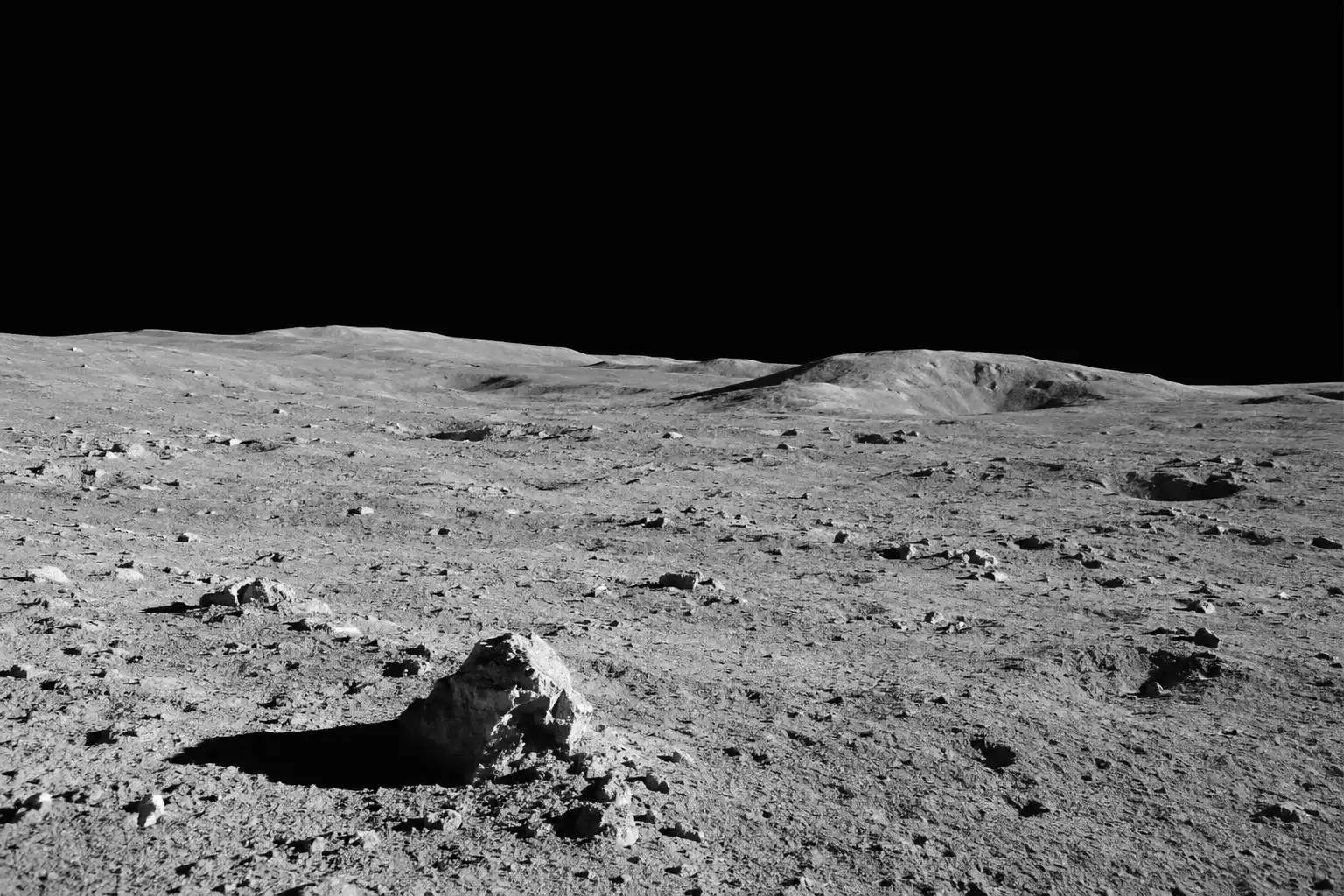

Imagine standing on the Moon at noon. The ground is dazzlingly bright. Your shadow is sharply outlined. Yet above you, the sky is black. How can sunlight illuminate the landscape without lighting up the space between the Sun and the ground?
The answer starts with something easy to overlook: on Earth, we don’t usually see light traveling through empty air. We see what happens when light reaches our eyes—often after bouncing off something along the way.
Light Needs Something to Send It Your Way
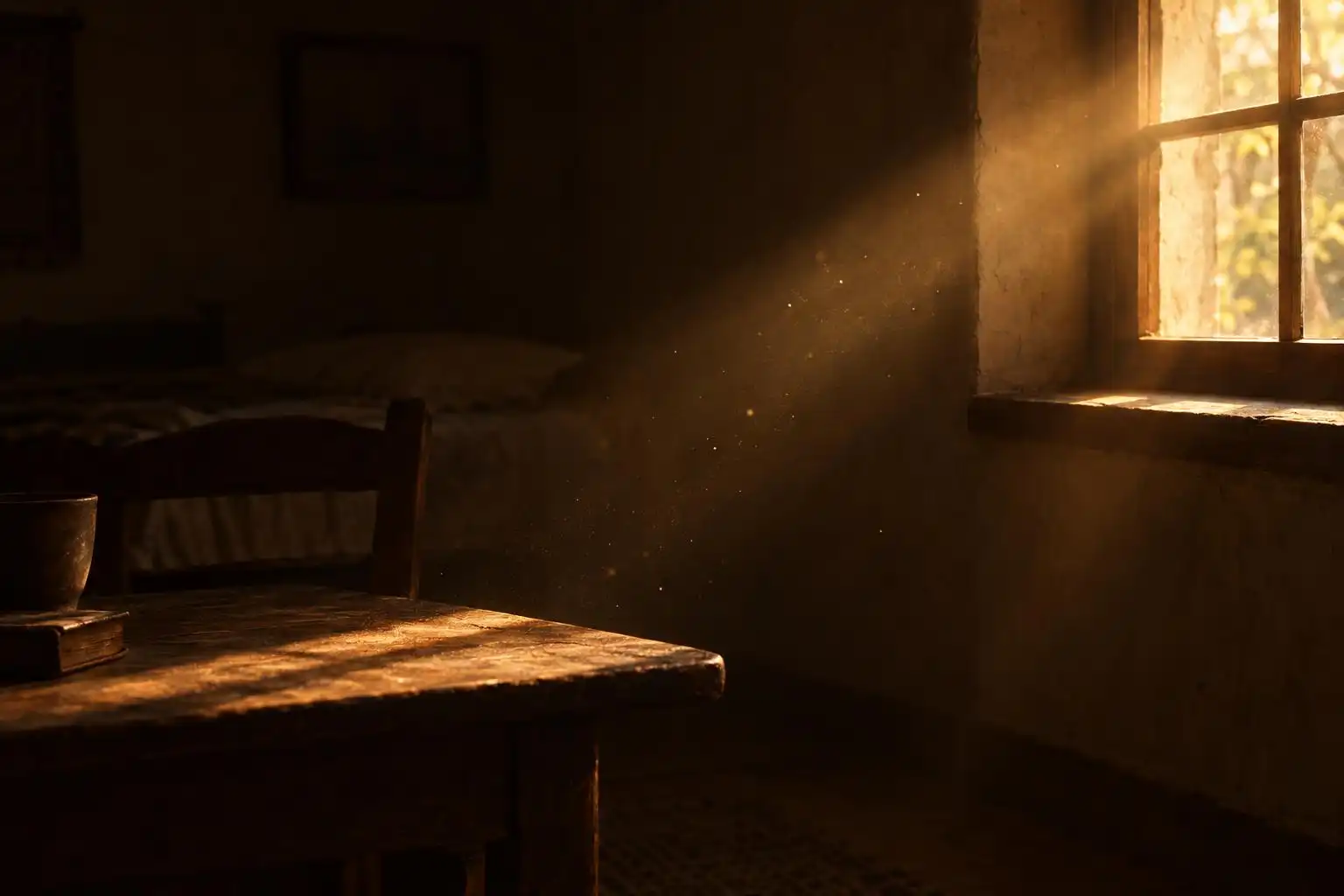
Picture a flashlight aimed across a clean, dark room. From the side, its beam may be almost invisible. Put a little dust or mist in the air, and suddenly you can trace its path. The dust and droplets scatter some of the flashlight’s light toward your eyes.
Sunlight works the same way. Space near Earth is not perfectly empty, but it contains vastly fewer particles than our atmosphere. There is little along most lines of sight to scatter sunlight toward you. Unless you look at the Sun or at something it illuminates, that part of space appears dark.
This does not mean darkness is a substance filling the gaps. Light from the Sun is crossing them. A camera pointed into that darkness would still be flooded with light if you turned it toward the Sun. The difference is where the light is going.
Earth’s Atmosphere Is a Giant Light-Scatterer
Our daytime sky looks bright because sunlight strikes the gases in the atmosphere. Tiny air molecules scatter shorter wavelengths of visible light more effectively than longer ones. Blue light is sent in many directions, including down toward your eyes, even when you aren’t looking anywhere near the Sun.
That scattered light gives the sky its blue glow. Sunsets make the same process visible in another way: sunlight traveling a longer path through air loses more of its blue light along your line of sight, leaving the Sun and nearby sky looking warmer and redder.
The Moon has almost no atmosphere. Its surface can reflect sunlight into your eyes, but there is no thick blanket of air above it to scatter sunlight across the sky. That is why a sunlit lunar landscape can sit beneath a black backdrop. An astronaut there would need eye protection against the Sun’s glare, not a lamp to find the daylight.
A Black Sky Can Still Hide the Stars
You might expect every star to stand out against that black lunar sky. Why, then, are stars absent from so many photographs taken on the Moon?
Think about taking a picture of someone beside a bright window. Set the camera to capture the person, and the window may turn into a white patch. Set it for the window, and the person becomes a silhouette. The Moon presents a similar exposure problem: a sunlit surface and an astronaut’s white suit are enormously brighter than distant stars. Camera settings that preserve detail in the foreground generally leave too little exposure to record the stars.
Black in a photograph does not always mean nothing was there. It can mean the available light was too faint for those particular settings. Stars can be photographed from the Moon with an appropriate exposure and a view shielded from direct sunlight and glare.
“Daytime” Depends on Where You Stand
On Earth, daytime usually means both that the Sun is above the horizon and that the sky around it is bright. We learn to treat those as one event. The Moon separates them: the Sun can be overhead while the sky remains black.
That distinction matters beyond the Moon. A planet with a thick, hazy atmosphere might have a softly glowing sky even when the Sun is hard to make out. On a nearly airless world, you could stand in fierce sunlight and still see darkness overhead. The appearance of a sky tells you something about the material between your eyes and space.
The Familiar Sky Is the Unusual Part
There is a small reversal hiding in this question. It feels as though space ought to be bright because sunlight passes through it. But a beam passing by is not the same as a beam arriving in your eyes. Earth’s blue daytime ceiling is not light’s default appearance; it is something our atmosphere makes.
The next time you see sunlight streaming through a dusty window, watch the floating flecks make its path visible. They offer a miniature version of what happens above your head every clear day. The blue sky is sunlight finding countless tiny detours into your eyes. Space looks black because, along most directions, those detours are missing.


Leave a Reply
You must be logged in to post a comment.