
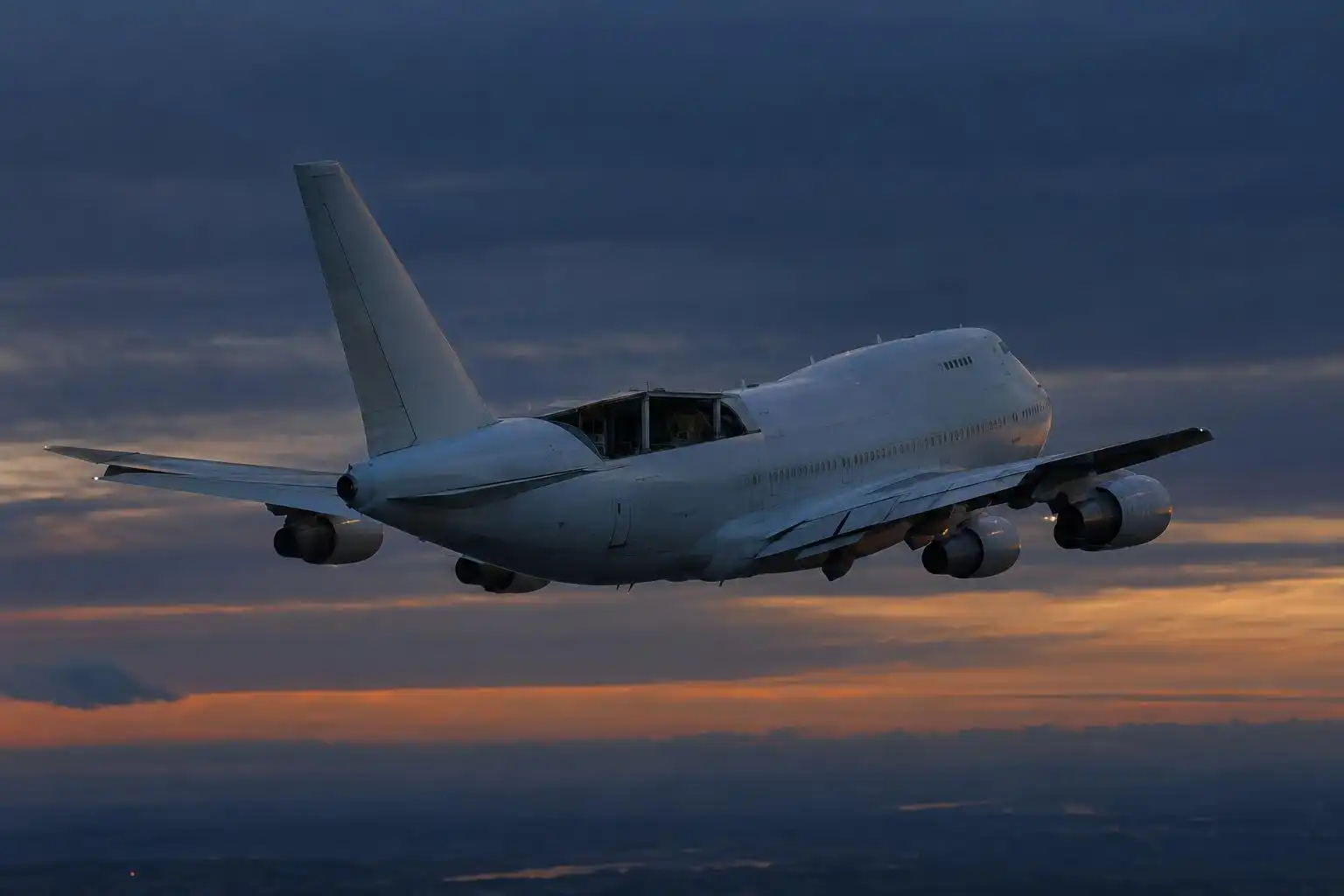

In November 2021, astronomers Fiona Harrison and Robert Kennicutt delivered a verdict that put NASA, Germany’s space agency and Congress on a collision course. Their national astronomy survey recommended ending SOFIA, a telescope mounted inside a Boeing 747, after lawmakers had repeatedly rescued it from proposed cuts. The issue was not whether the aircraft could still make discoveries. It was whether those discoveries justified roughly $85 million a year in NASA operating costs.
Five months later, NASA and the German Aerospace Center, known as DLR, announced that SOFIA would stop flying in September 2022. The decision closed a long-running fight over a question every expensive observatory eventually faces: who gets to decide when a scientifically useful instrument has become too costly to keep?
A telescope built to fly above the water vapor
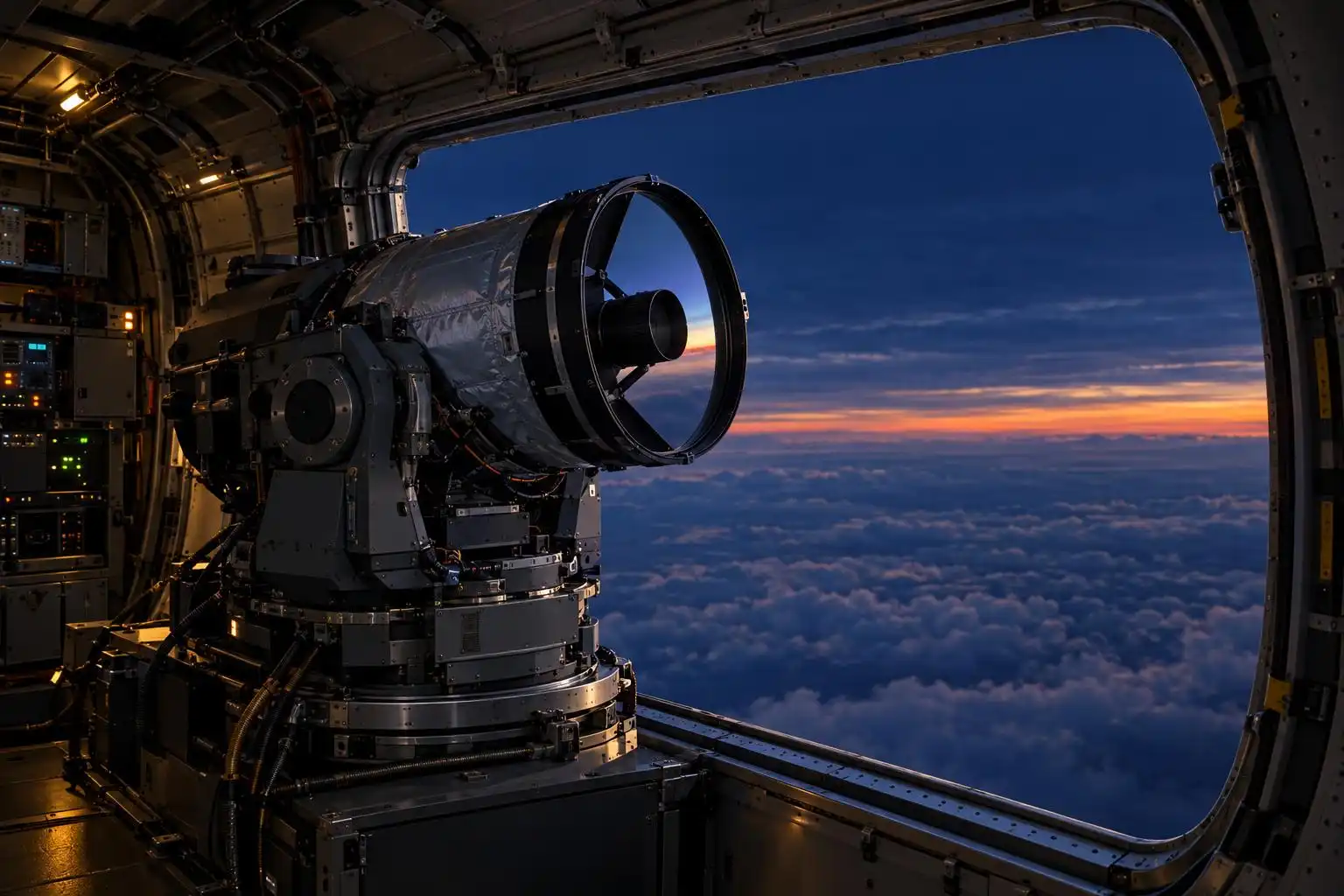
SOFIA—the Stratospheric Observatory for Infrared Astronomy—carried a 2.5-meter telescope in a modified Boeing 747SP. Flying high above most atmospheric water vapor gave it access to infrared wavelengths that are difficult or impossible to observe from the ground. NASA and DLR shared the project, with NASA responsible for about 80 percent of its costs and Germany for about 20 percent.
The aircraft made its first science flight in 2010 and reached full operational capability in 2014. Its mobility was a scientific advantage: crews could change instruments and fly to observe events visible from particular parts of the world. In 2019, SOFIA observations helped identify helium hydride in a planetary nebula, detecting a molecule long sought in space.
Those achievements made cancellation harder to explain than a simple story about a failed telescope. SOFIA worked. The dispute concerned what it produced for the money and what other astronomy NASA could fund instead.
Congress had saved it before
The first major threat came before SOFIA had fully settled into routine operations. In its fiscal year 2015 budget proposal, the Obama administration sought to place the observatory in storage unless another partner could cover its costs. Congress restored funding. The decision gave scientists more time to use a facility that had taken years to build, but it postponed rather than resolved the argument over its annual expense.
The Trump administration tried again in its fiscal year 2021 budget proposal, issued in February 2020. Congress again kept SOFIA flying. For its supporters, those rescues recognized a capability that could not simply be replaced by a ground-based telescope. For budget planners, they left a large recurring commitment in NASA’s astrophysics program.
DLR had a stake in more than the budget arithmetic. Germany had supplied the telescope and supported a partnership whose usefulness depended on NASA continuing to operate the aircraft. A unilateral American decision to stop funding SOFIA would therefore have consequences for a partner as well as for researchers awaiting flight time.
The survey changed the terms of the fight
NASA did not have to rely solely on an administration’s budget proposal in 2022. The astronomy community had completed Astro2020, its once-a-decade review of scientific priorities, chaired by Harrison and Kennicutt and published in November 2021. Such surveys do not write federal budgets. They do, however, give NASA and Congress an influential assessment of which investments deserve scarce resources.
This time, the assessment went against SOFIA. In its April 28, 2022, announcement of the mission’s end, NASA summarized the survey’s conclusion: “SOFIA’s science productivity does not justify its operating costs.” It was a consequential sentence because it came from an astronomy priority-setting process, not merely from an agency looking for a cut.
That judgment did not mean every SOFIA observation lacked value. It compared the observatory’s expected return with its substantial operating bill. Nor could the James Webb Space Telescope, launched in December 2021, take over every SOFIA observation: the two facilities covered different wavelengths and worked in different ways. The question was whether those differences warranted continuing a dedicated airborne mission.
What ending a mission actually required
NASA and DLR announced on April 28, 2022, that SOFIA would conclude operations after the end of that fiscal year, on September 30. The agreement gave the partners a defined endpoint rather than another annual fight over whether the aircraft would fly. SOFIA made its final science flight in September 2022.
Ending flights did not end the value of the observations already collected. Archived data remained available for analysis, and researchers could continue publishing results. But an archive cannot schedule a new flight, install a new instrument or respond to a newly discovered event. Those losses were real, even if the money saved could support other work.
SOFIA’s history shows why ending a big-science project can take longer than deciding to start one. NASA had to account for scientific opportunity costs; Congress could reject a proposed cut; DLR had invested in a shared facility; and researchers had legitimate uses for an instrument that still worked. The decadal survey did not erase those interests. It supplied the independent judgment that made a final decision possible: usefulness alone was not enough to secure an unlimited operating life.


Leave a Reply
You must be logged in to post a comment.