
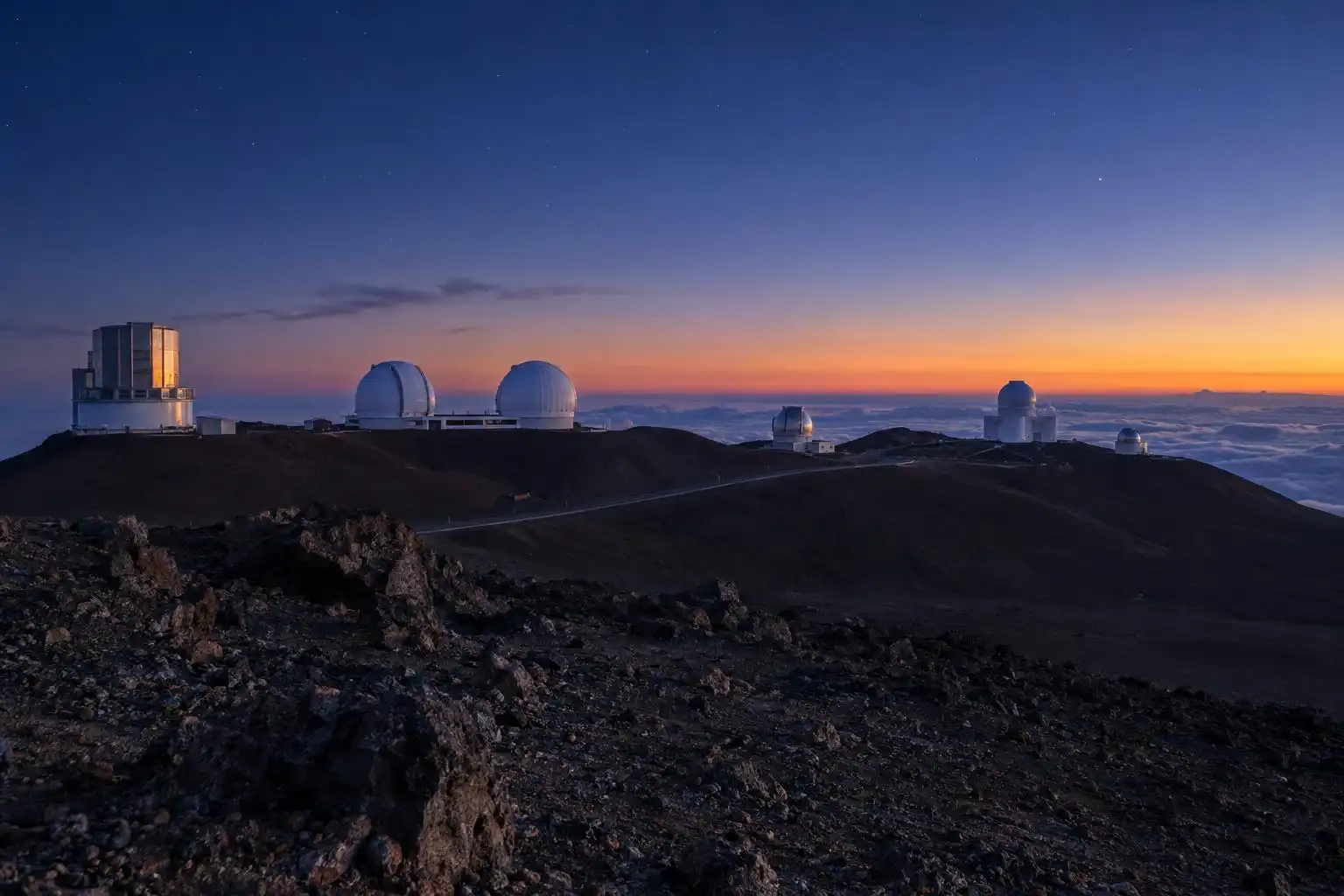

On July 17, 2019, police arrested 33 Native Hawaiian elders blocking the access road to Maunakea. They were trying to stop construction of the Thirty Meter Telescope, a roughly $1.4 billion project backed by institutions including Caltech and the University of California. Hawaii Governor David Ige’s administration had authorized the work. The elders, known as kūpuna, were asking a more fundamental question: who had the right to decide what happened on the mountain?
The standoff put three parties in direct conflict: an international astronomy partnership seeking one of the world’s most powerful telescopes, Native Hawaiian protectors defending a place of cultural and spiritual significance, and a state government that had issued a construction permit. A court ruling had already exposed a serious failure in that permitting process. Getting permission to build, it turned out, was not the same as earning public trust.
A telescope with global ambitions
The Thirty Meter Telescope, or TMT, was designed around a 30-meter segmented mirror. Its backers argued that the observatory could study distant galaxies and planets around other stars in detail beyond the reach of existing ground-based telescopes. Maunakea’s altitude and observing conditions made it an attractive site.
The partnership extended well beyond Hawaii. Alongside Caltech and the University of California were institutions in Japan, China, India and Canada. That international backing gave the project scientific weight, but it also sharpened the political stakes: decisions made by universities and governments far from the mountain would have consequences for people who live near it and maintain relationships with it.
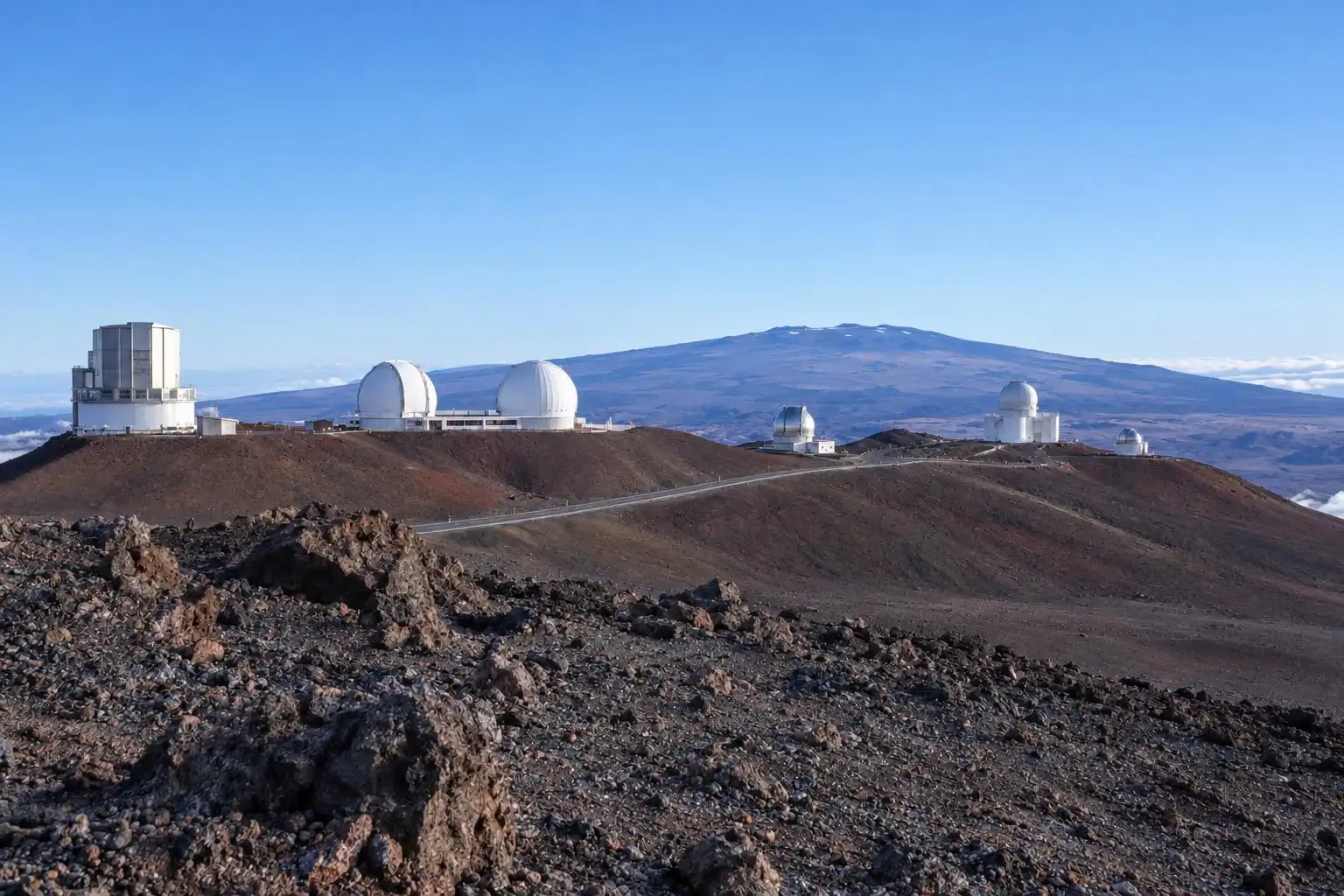
Maunakea was already home to major observatories. To supporters, another telescope looked like a continuation of a productive scientific site. To many opponents, the existing facilities were evidence that development had been allowed to accumulate without adequately respecting Native Hawaiian concerns. Those positions could not be reconciled simply by explaining what the new instrument might discover.
The permit the court threw out
Construction-related opposition intensified around the project’s 2014 groundbreaking and again in 2015. The decisive legal setback came on December 2, 2015, when the Hawaii Supreme Court invalidated TMT’s conservation-district permit. The state Board of Land and Natural Resources had approved it before completing a contested-case hearing sought by opponents.
“The BLNR put the cart before the horse when it issued the permit before the contested case hearing was held,” the court wrote in its opinion. That was a ruling about due process, not a finding that astronomy had no place on Maunakea. It meant the state could not treat the hearing as an afterthought once it had already granted permission.
After a new hearing, the board issued another permit in 2017. The Hawaii Supreme Court upheld that approval in 2018. For TMT, the ruling restored a legal route toward construction. For opponents, it did not resolve the larger dispute over stewardship, cultural rights and whether another observatory should be built at all.
What the 2019 blockade changed
When officials moved to reopen access for construction in July 2019, protectors established a blockade. The arrests of kūpuna drew widespread attention and made the cost of proceeding visible. Governor Ige’s administration faced a project it had permitted but could not readily move forward without confrontation. TMT’s backers, meanwhile, had to reckon with a problem that better engineering could not solve.
The dispute is sometimes described as science against culture. That framing misses what many protectors were contesting: the authority to approve this particular project, on this particular mountain, under a system of land management they considered inadequate. It also obscures a practical distinction. A court can determine whether a permit was lawfully issued; it cannot, by that decision alone, create consent.
The TMT partnership examined a backup location on La Palma in the Canary Islands while continuing to pursue Maunakea. The alternative demonstrated that the observatory’s scientific goals and its proposed site were separate decisions, even if changing sites carried scientific and financial costs.
Federal ambitions meet a local dispute
In November 2021, the US astronomy community’s decadal survey recommended federal investment in a program involving TMT and the Giant Magellan Telescope. That recommendation elevated the stakes for the National Science Foundation: a project conceived through an international partnership could become a substantial claim on US public funds.
A scientific priority, however, is not a construction permit or an appropriation. Nor does a national recommendation erase obligations to the community at a proposed site. The same institutions asking taxpayers to support a next-generation telescope had to confront the question the blockade made unavoidable: what would responsible participation require if local opposition persisted?
Hawaii’s legislature acknowledged the management problem in 2022 by creating the Maunakea Stewardship and Oversight Authority to take over stewardship from the University of Hawaii after a transition. Establishing a new authority did not settle TMT’s future. It did show that the dispute had exposed questions larger than one telescope permit.
The lesson of Maunakea is not that ambitious science must stop when it meets resistance, or that a valid permit means resistance no longer matters. It is that big scientific projects are also governance projects. If institutions leave consultation, stewardship and public accountability until construction is imminent, a billion-dollar plan can be legally approved and still be unable to proceed.



Leave a Reply
You must be logged in to post a comment.