
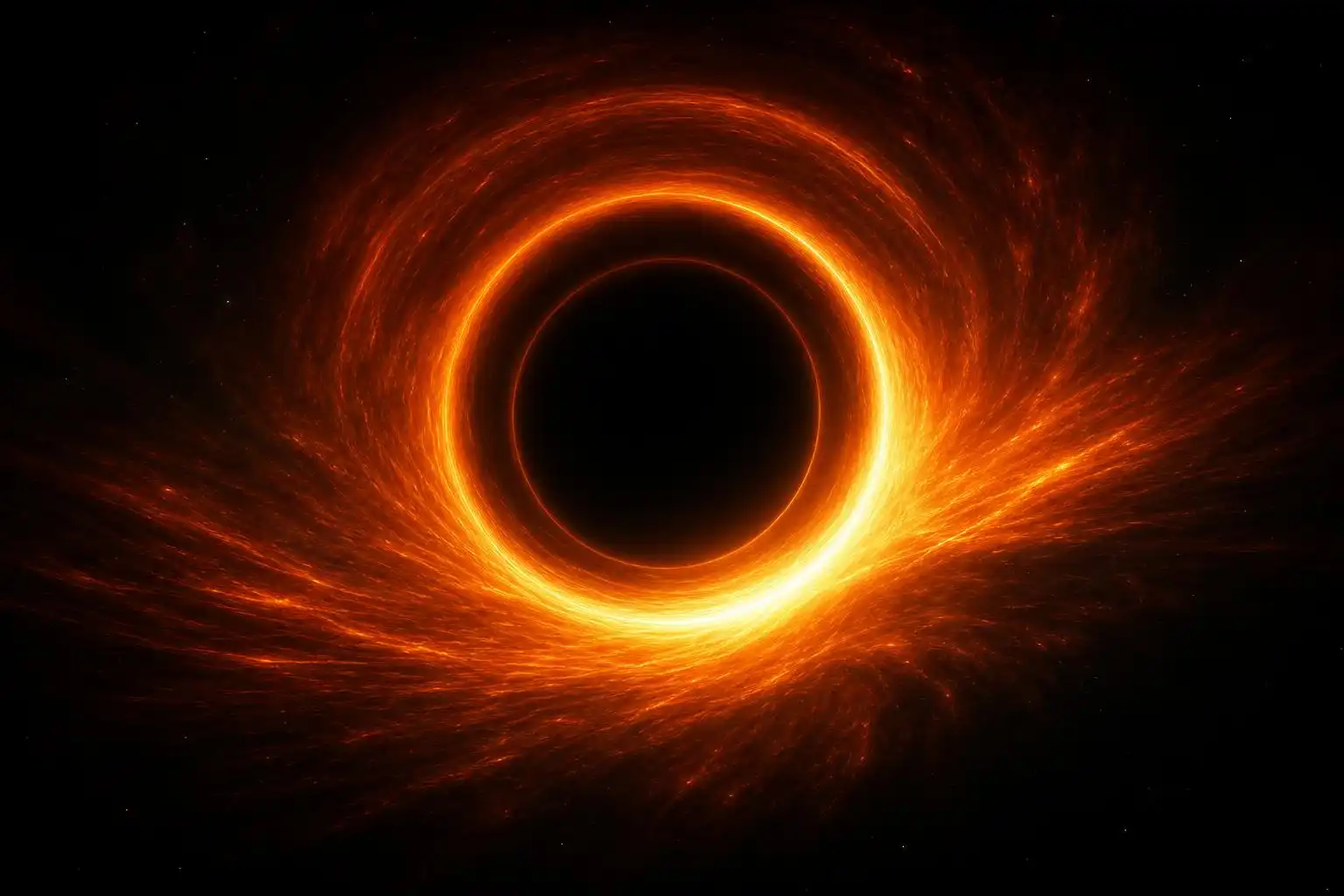
On April 10, 2019, six press conferences opened simultaneously in Washington, Brussels, Santiago, Shanghai, Taipei, and Tokyo. At each one, a single image appeared on the screen: a fuzzy orange ring surrounding a dark central void, 6.5 billion solar masses of collapsed spacetime sitting 55 million light-years away in the galaxy M87. It was the first direct photograph of a black hole’s shadow, and it had taken more than a decade, eight telescopes on four continents, a petabyte of hard drives flown by airplane from the South Pole, and a budget fight that nearly stranded the entire project to produce it.
The story the press releases told was one of triumph. The story behind the press releases was considerably messier.
The Idea That Everyone Said Was Impossible
The Event Horizon Telescope was not born at a single institution or in a single grant proposal. Its intellectual lineage runs to a 1973 paper by James Bardeen, who calculated what a black hole’s shadow should look like, and to a 2000 paper by Falcke, Melia, and Agol in The Astrophysical Journal Letters that argued, for the first time, that Sagittarius A*—the 4-million-solar-mass black hole at the center of the Milky Way—might be resolvable with millimeter-wave radio interferometry. The paper was greeted with polite skepticism. Resolving the shadow of Sgr A* requires an angular resolution of roughly 50 microarcseconds. For comparison, the Hubble Space Telescope resolves about 50,000 microarcseconds. You would need a radio dish the size of Earth.
That is, in fact, what the EHT became.
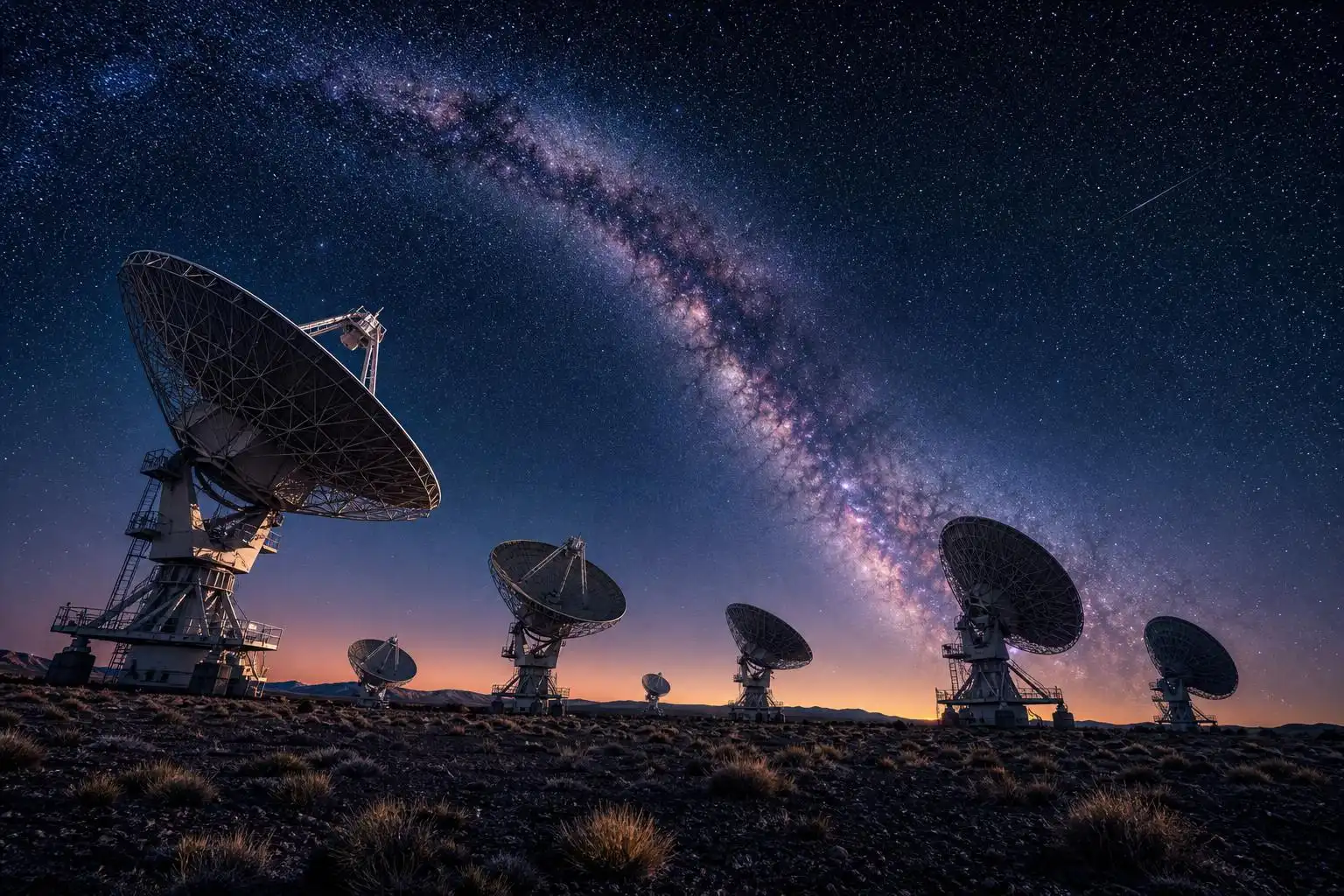
Very Long Baseline Interferometry—VLBI—allows radio telescopes separated by thousands of kilometers to act as a single dish, with angular resolution set by the distance between them rather than the size of any individual antenna. By 2006, Sheperd Doeleman, then at the MIT Haystack Observatory, had begun assembling a coalition of radio facilities willing to observe simultaneously at 1.3 millimeters, the shortest wavelength at which Earth’s atmosphere is transparent enough for VLBI to work. The first fringes—the interference patterns that confirm two telescopes are successfully linked—between Hawaii’s James Clerk Maxwell Telescope and dishes in Arizona were detected in 2007. The baseline was roughly 4,500 kilometers. The angular resolution was not yet enough to image a shadow, but it was enough to show that Sgr A*’s emission region was smaller than anyone had dared assume.
Doeleman published those results in Nature in September 2008. The abstract was careful. The press coverage was not. “Scientists See Shadow of Black Hole” ran one headline. Doeleman spent the better part of a year correcting the record in public talks: they had constrained the size of the source, not imaged anything. The actual image would require more telescopes, shorter wavelengths, and money that did not yet exist.
The Funding Maze
Here is where the institutional story gets complicated.
The EHT was never a single funded project with a single principal investigator and a single line item in a budget. It was, for most of its formative years, a loose consortium of facilities each funded by different national agencies—the National Science Foundation in the United States, the European Research Council, the East Asian Observatory, the Max Planck Institute for Radio Astronomy in Germany, and others. Doeleman held an NSF grant through the Harvard-Smithsonian Center for Astrophysics, where he had moved in 2012, but the EHT as a whole had no legal existence, no central bank account, and no formal governance structure until the collaboration formally organized as the Event Horizon Telescope Collaboration (EHTC) in the mid-2010s.
The NSF’s Major Research Equipment and Facilities Construction program—the same program that funds things like the Daniel K. Inouye Solar Telescope and, more contentiously, the next generation of radio arrays—was never tapped for the EHT in the way it was for LIGO. Instead, the EHT assembled itself through a strategy that one collaborator, speaking at a 2017 conference, described as “coalition of the willing and the funded.” Individual institutions brought their own telescopes. Individual nations brought their own grants. The coordination was held together by Doeleman’s group at the CfA, by a series of NSF grants totaling roughly $26 million between 2012 and 2019, and by the extraordinary logistical feat of getting eight observatories on four continents to point at the same patch of sky during the same ten-day window every April.
The critical addition was the Atacama Large Millimeter Array—ALMA—in Chile. ALMA, a $1.4 billion facility built jointly by the United States, Europe, and East Asia, is the most sensitive millimeter-wave radio telescope ever constructed. Its inclusion in the EHT array increased the project’s sensitivity by a factor of ten. But ALMA’s governing board had to approve the telescope’s participation, and that approval was not automatic. ALMA’s primary mission is high-resolution imaging of molecular clouds and protoplanetary disks; its time is extraordinarily competitive, and the EHT was asking for coordinated observing runs that would take the entire array offline for other users. The negotiation took years. ALMA formally joined the EHT array in 2017. Without it, the April 2017 observing campaign—the one that produced the M87 image—would have been impossible.
The South Pole Problem
Then there was the data.
VLBI at millimeter wavelengths does not transmit data in real time. The baselines are too long, the data rates too high, and the radio frequencies too far from anything a satellite link can handle. Each telescope records its data to hard drives, stamps each data point with an atomic clock signal accurate to a few hundred picoseconds, and ships the drives to a central correlator—in the EHT’s case, the MIT Haystack Observatory and the Max Planck Institute for Radio Astronomy in Bonn—where the signals are combined computationally.
The South Pole Telescope, operated by the University of Chicago and the NSF at the Amundsen-Scott South Pole Station, was an EHT node primarily relevant to the Sgr A* dataset. Because M87 lies north of the celestial equator, it is below the horizon as seen from the South Pole; the SPT could not observe it. For Sgr A*, however, the SPT provided a valuable long baseline to other array stations. The South Pole is resupplied by aircraft only during the Antarctic summer. The 2017 observing campaign ran in April. The first flight out of the South Pole after winter does not occur until October. The SPT’s hard drives—a substantial volume of raw data—sat on the ice for six months before they could be shipped to the correlators.
The collaboration had planned for this. The imaging team did not wait idly. But it meant that the full Sgr A* dataset could not be assembled until late 2017, that correlation took months into 2018, and that the first serious imaging attempts did not begin until mid-2018. The gap between the April 2017 observation and the April 2019 announcement was not bureaucratic delay. It was physics, logistics, and the Antarctic winter.
Katie Bouman and the Algorithm Fight
In April 2019, a photograph of a young woman sitting in front of a laptop, her hands raised to her face in apparent disbelief, went viral. The woman was Katie Bouman, then a 29-year-old postdoctoral fellow at the Harvard-Smithsonian Center for Astrophysics who had been a key contributor to the imaging effort used to reconstruct the black hole image. The caption on many posts identified her as “the woman who took the first photo of a black hole.”
What followed was a case study in how scientific credit gets contested in the internet age.
Within days, a counter-narrative appeared on social media, amplified by bad-faith actors, claiming that Bouman’s contribution had been overstated and that the real computational work had been done by Andrew Chael, another member of the imaging team. Chael—who is gay and whose Twitter bio at the time noted that fact—was held up, with apparent irony, as the true unsung hero. Chael responded publicly and forcefully: he credited Bouman’s leadership, noted that the imaging effort had involved a team of roughly 40 people, and stated that the attempt to pit them against each other was “awful.” Bouman herself had always described the image as a team product. Her original 2016 TED talk on the CHIRP algorithm she developed was titled, accurately, “How to take a picture of a black hole”—not “How I took a picture.”
The EHTC published its results in a special issue of The Astrophysical Journal Letters on April 10, 2019. The first paper lists 347 authors. The imaging paper—Paper IV—lists the same 347 authors, with no individual singled out as lead. That is standard practice for large collaborations. It did nothing to resolve the public controversy, which had less to do with the science than with pre-existing cultural anxieties about women in STEM and the dynamics of viral celebrity.
Bouman was hired as an assistant professor at Caltech in June 2019. She has since received a MacArthur Fellowship. Chael completed his postdoc and moved to a faculty position at Princeton. The algorithm fight, in the end, revealed more about the media ecosystem than about the collaboration.
The Sagittarius A* Problem
The M87 image, striking as it was, was not the primary scientific target. The EHT had been designed, from the beginning, around Sagittarius A*—the black hole at the center of our own galaxy. Sgr A* is 1,500 times less massive than M87*, but it is 2,000 times closer, which means its angular size on the sky is comparable. It should have been the easier target.
It was not.
The problem is variability. M87* is so large that light takes several days to cross the diameter of its event horizon. During a single night’s observation, it barely changes. Sgr A*, with an event horizon light-minutes across, flickers on timescales of minutes. Imaging it with VLBI is like trying to photograph a campfire in a hurricane using an exposure time of several hours. Every frame is blurred by the source’s own motion.
The collaboration spent three years after the M87 publication developing new imaging techniques specifically designed to handle a variable source. They used machine learning tools, new regularization methods, and a statistical framework that allowed them to reconstruct a time-averaged image while accounting for the source’s variability. The Sgr A* results were published on May 12, 2022—also in a special issue of The Astrophysical Journal Letters, also with hundreds of authors, also accompanied by simultaneous press conferences around the world.
The image looked remarkably like M87*: a bright ring, a dark center, the same physics playing out at a different scale. General relativity, once again, matched the observations. The shadow size was consistent with Einstein’s predictions to within measurement uncertainties. The result was simultaneously a triumph and, to some physicists, a mild disappointment: the universe had declined to break its own laws.
The Next Generation and the Budget Fight That Isn’t Over
The EHT’s current configuration has reached its practical limits. Adding more telescopes at existing latitudes produces diminishing returns on angular resolution. The next step—already in planning as of 2024—is the next-generation EHT, or ngEHT, which would add roughly ten new stations at carefully chosen locations, including high-altitude sites in Africa, Greenland, and the Amazon basin, to fill gaps in the current array’s coverage. The ngEHT would be capable of producing not just images but movies of black hole accretion, resolving features at scales of a few Schwarzschild radii.
The estimated cost is on the order of $300 to $500 million, depending on which stations are built and how existing infrastructure is leveraged. As of the 2020 Decadal Survey—Pathways to Discovery in Astronomy and Astrophysics for the 2020s, published by the National Academies in November 2021—the ngEHT was not among the top-ranked large initiatives. The survey’s large ground-based priority was the Thirty Meter Telescope and the Giant Magellan Telescope (consolidated under the U.S. Extremely Large Telescope program). The ngEHT appeared in the “medium” category, recommended for development but not yet funded.
That ranking has consequences. NSF’s budget for major new facilities is not infinite—it rarely exceeds $300 million per year for all of astronomy combined—and the queue of approved projects already includes the Vera C. Rubin Observatory (formerly LSST), the ngVLA (next-generation Very Large Array, with an estimated price tag of $2.3 billion), and the CMB-S4 experiment. The ngEHT is competing for scraps of a budget that is already overcommitted.
Doeleman, who stepped down as EHT director in 2022 and was succeeded by Vincent Fish at MIT Haystack, has been vocal about the funding gap. In a 2023 interview with Science magazine, he argued that the ngEHT represented “the most cost-effective path to transformational black hole science” available to the community. Whether NSF agrees—and whether Congress agrees with NSF—remains unresolved.
The Institutional Lesson
The Event Horizon Telescope succeeded because it was, structurally, almost impossible to kill. No single agency controlled it. No single cancellation could have ended it. When the NSF’s contribution shrank in a lean budget year, the European Research Council’s grants kept the imaging work going. When ALMA’s governing board hesitated, the collaboration waited and negotiated rather than demanding. When the South Pole’s hard drives were stranded on the ice, the team recalibrated its timeline rather than its science.
That resilience was also a vulnerability. The EHT’s distributed funding model meant that no single institution was accountable for its overall cost, schedule, or scientific return. The collaboration had no formal project manager in the aerospace sense, no independent cost estimate reviewed by an outside panel, no Nunn-McCurdy threshold to trigger congressional scrutiny. It escaped the pathologies that plagued JWST and LIGO’s early years precisely because it was too small and too distributed to attract that kind of oversight.
The ngEHT will not have that luxury. At $300 to $500 million, it is large enough to require formal project management, independent cost reviews, and a clear line of funding authority—probably NSF’s MREFC program, the same mechanism that funded ALMA. That means it will face the same gauntlet that every major NSF facility faces: a Decadal Survey ranking, a conceptual design review, a preliminary design review, a final design review, and then a construction authorization vote in Congress. The timeline from “medium priority in the Decadal Survey” to “first light” is typically fifteen to twenty years.
The first image of a black hole was produced by a coalition held together by scientific ambition, institutional flexibility, and a postdoc’s algorithm. The second generation will be produced, if it is produced at all, by a process that looks a great deal more like building a battleship. Whether the science survives that process intact is the question that the Event Horizon Telescope’s institutional history cannot yet answer.



Leave a Reply